20 FUN AND EASY WINTER SCIENCE ACTIVITES THAT KIDS LOVE

Winter doesn’t have to mean staying bored indoors — it can become the perfect season for exciting hands-on learning! Fun and easy winter science activities that kids love turn everyday snow, ice, and cold air into powerful teaching tools that spark curiosity and creativity.
From melting ice races and crystal snowflakes to frozen bubbles and mini weather stations, these activities help children explore real scientific concepts like heat transfer, weather patterns, density, and plant growth in a playful way. Best of all, they use simple materials you already have at home, making science accessible, engaging, and unforgettable — even on the coldest days. ❄️🔬
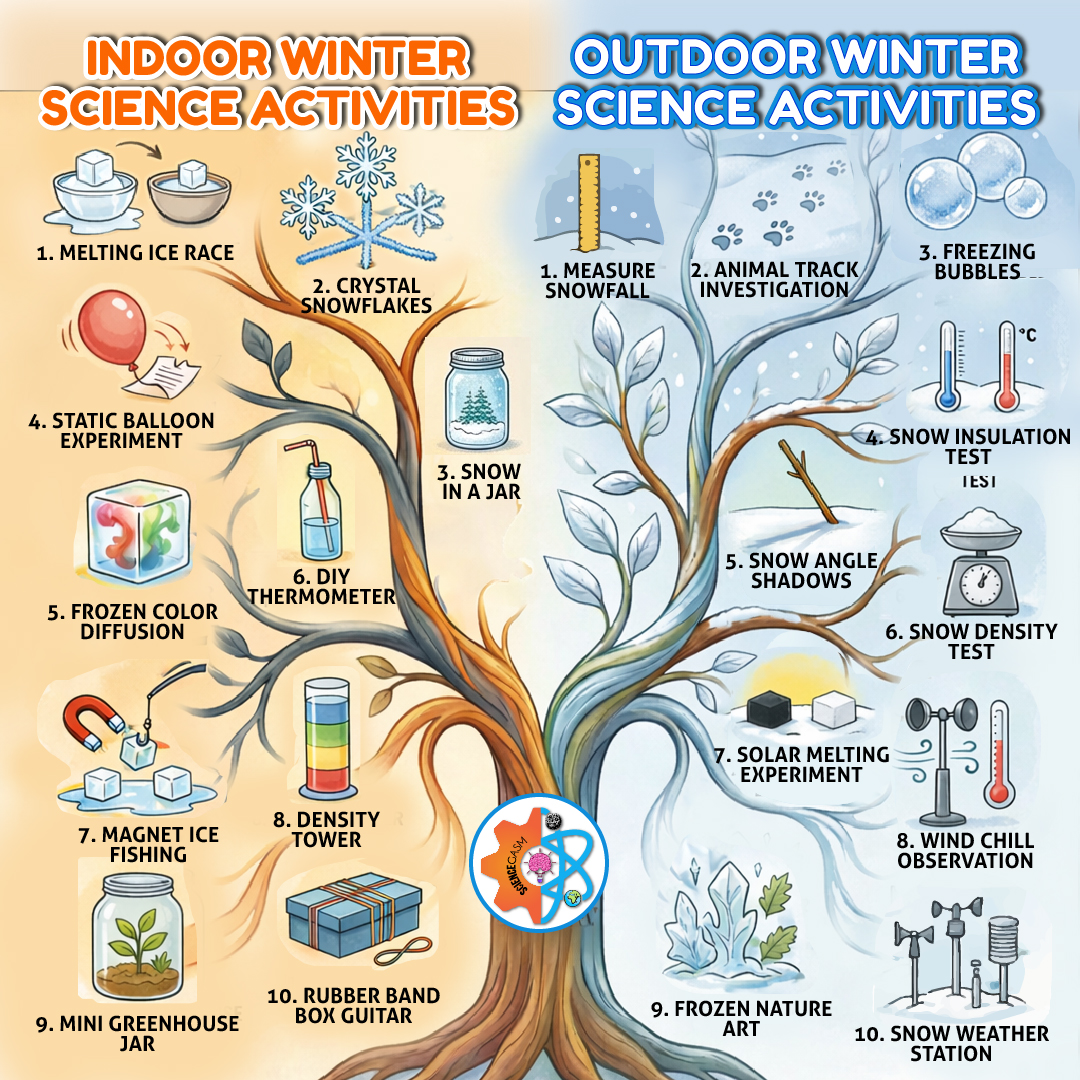
🏠 10 Indoor Winter Science Activities (Hands-On Learning)
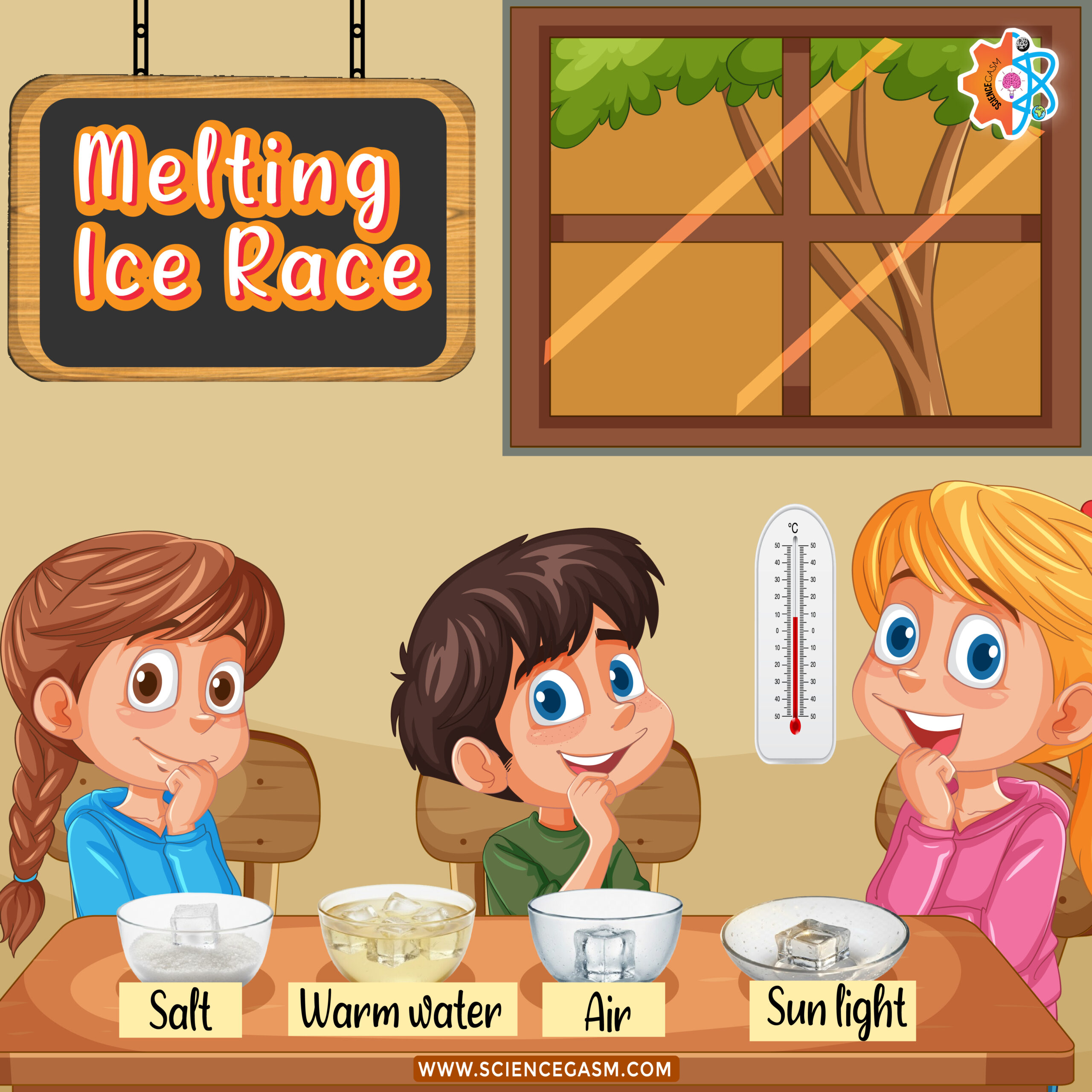
1. Melting Ice Race
Kids race to melt ice using different conditions like salt, warm water, room air, and sunlight — then observe which method works fastest. Before starting, children can make predictions about what they think will happen, turning the activity into a real mini science experiment. As the ice melts at different speeds, they learn how heat transfers from warmer surroundings into colder objects and how solid water changes into liquid. It’s a simple, hands-on way to explore states of matter, temperature, and cause-and-effect — all while having fun racing nature itself. ❄️🔬
👉 Takeaway: heat transfer, states of matter
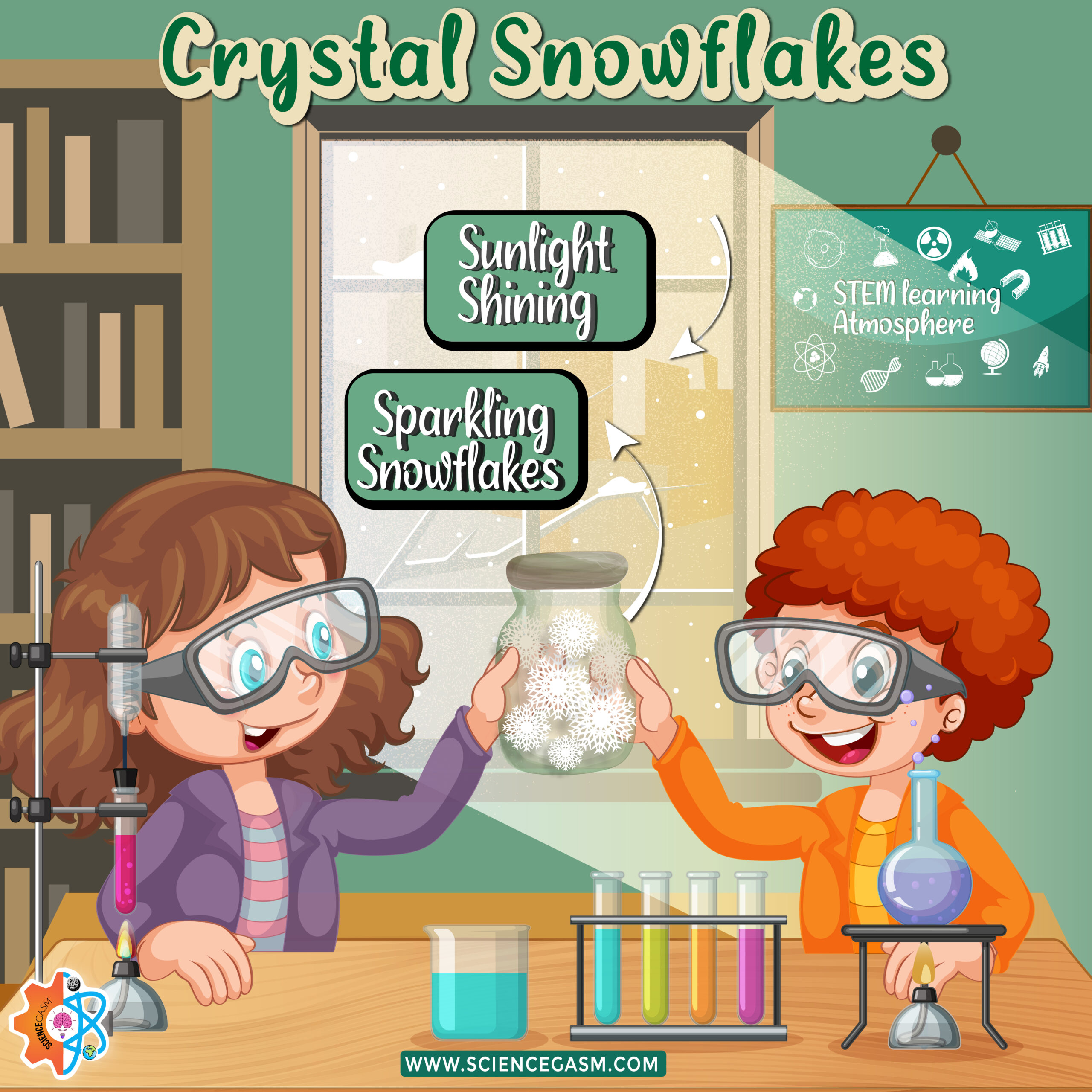
2. Grow Crystal Snowflakes (salt or sugar crystals)
Children create their own sparkling crystal “snowflakes” using simple ingredients like salt or sugar and warm water. By dissolving the crystals and allowing the solution to slowly evaporate over time, children observe how tiny particles come back together to form beautiful solid structures. As the water disappears, crystals grow larger and more defined, teaching kids about evaporation and the process of crystallization in a visual, hands-on way. It’s a perfect blend of patience, creativity, and real-world chemistry that makes science feel like a winter wonderland experiment. ✨❄️
👉 Takeaway: evaporation, crystallization
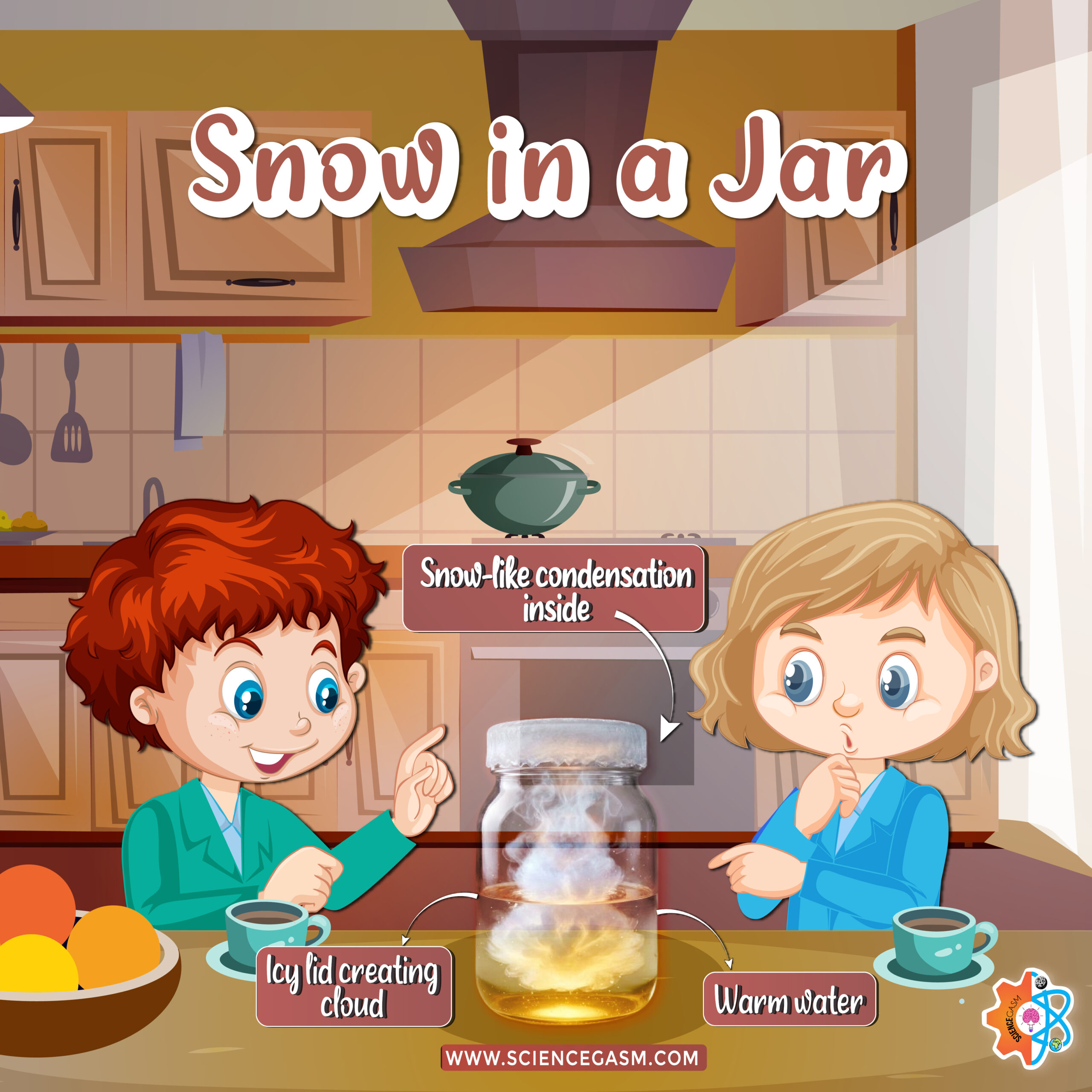
3. DIY Snow in a Jar (hot water + ice on lid)
Simple and exciting! kids pour hot water into a jar and place ice on the lid to instantly create a snowy cloud inside. As the warm water heats the air, water vapor rises and cools when it touches the cold lid, forming tiny droplets that fall like snow. This hands-on activity beautifully demonstrates how condensation turns vapor into liquid and how precipitation forms in real clouds. It’s an easy way for children to understand how snow and rain happen in nature — all inside a jar! ❄️🌧️
👉 Takeaway: condensation & precipitation
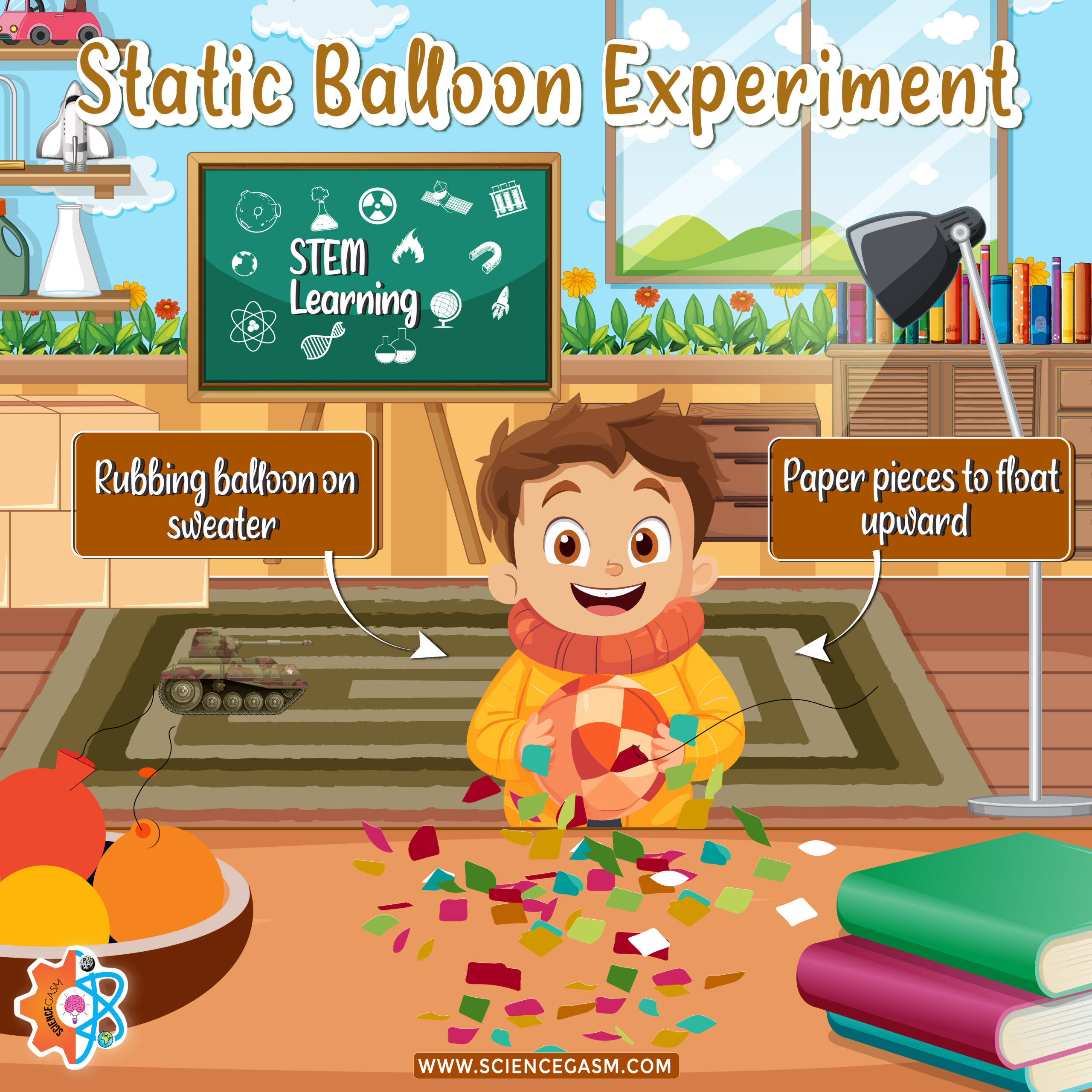
4. Balloon Static Electricity Experiments
Kids rub a balloon on their hair or a wool sweater and then hold it near small paper pieces, water streams, or even a wall to watch objects magically move and stick. This happens because rubbing transfers electric charges, creating static electricity that attracts lightweight materials. Through simple play, children learn how electric charge builds up and how opposite charges pull toward each other. It’s a hands-on way to explore invisible forces that power everything from lightning to everyday electronics. ⚡🎈
👉 Takeaway: electric charge & attraction
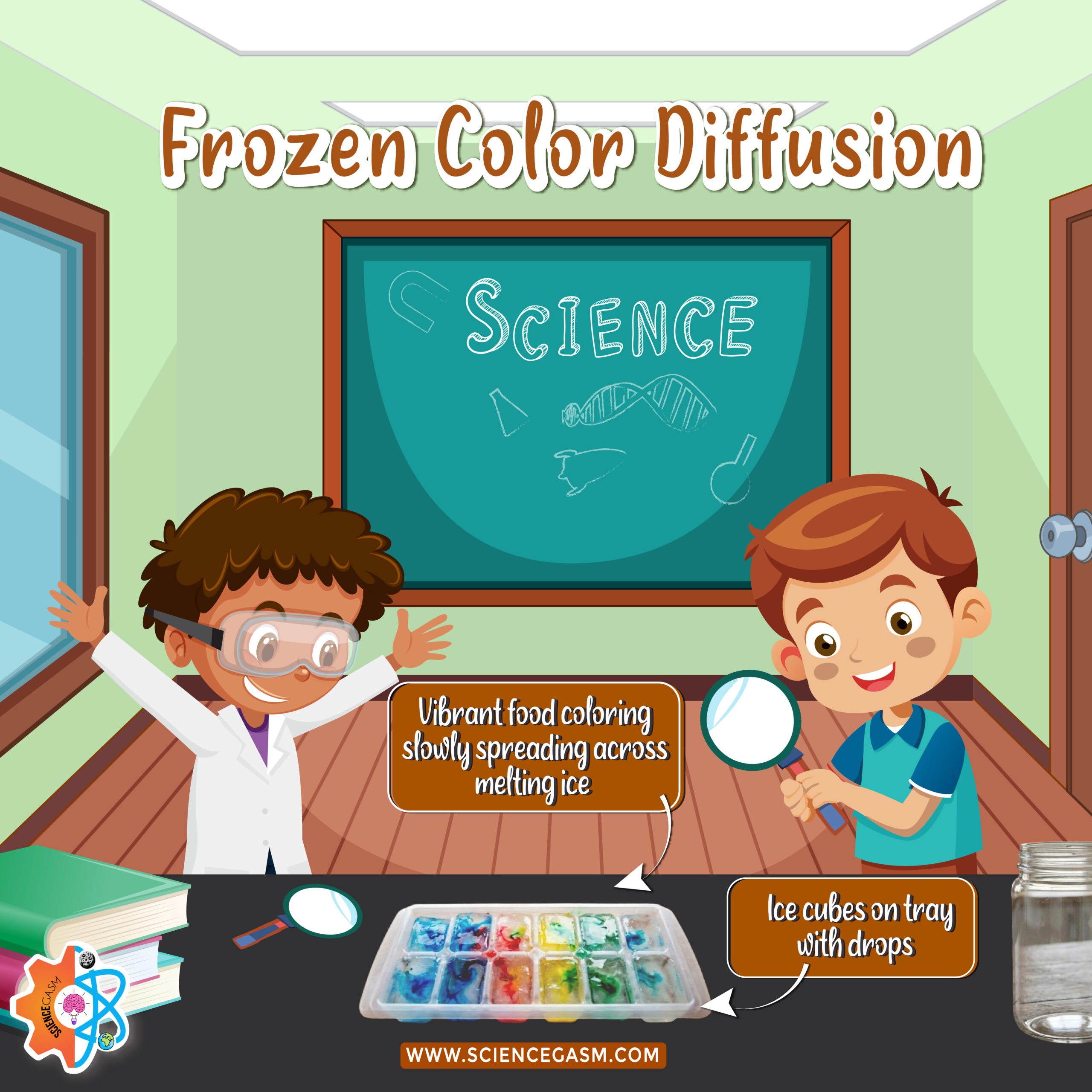
5. Frozen Color Diffusion (food coloring on ice)
A beautiful winter experiment! Kids drip food coloring onto ice cubes and watch as the colors slowly spread and swirl across the frozen surface. Compared to warm water, the movement is much slower — showing how cold temperatures reduce molecular motion. As the ice melts, the colors begin to flow faster, making the change easy to observe in real time. This simple activity helps children understand how temperature affects how quickly molecules move and mix, turning an abstract science concept into something they can see and explore. 🎨❄️
👉 Takeaway: temperature effect on molecules
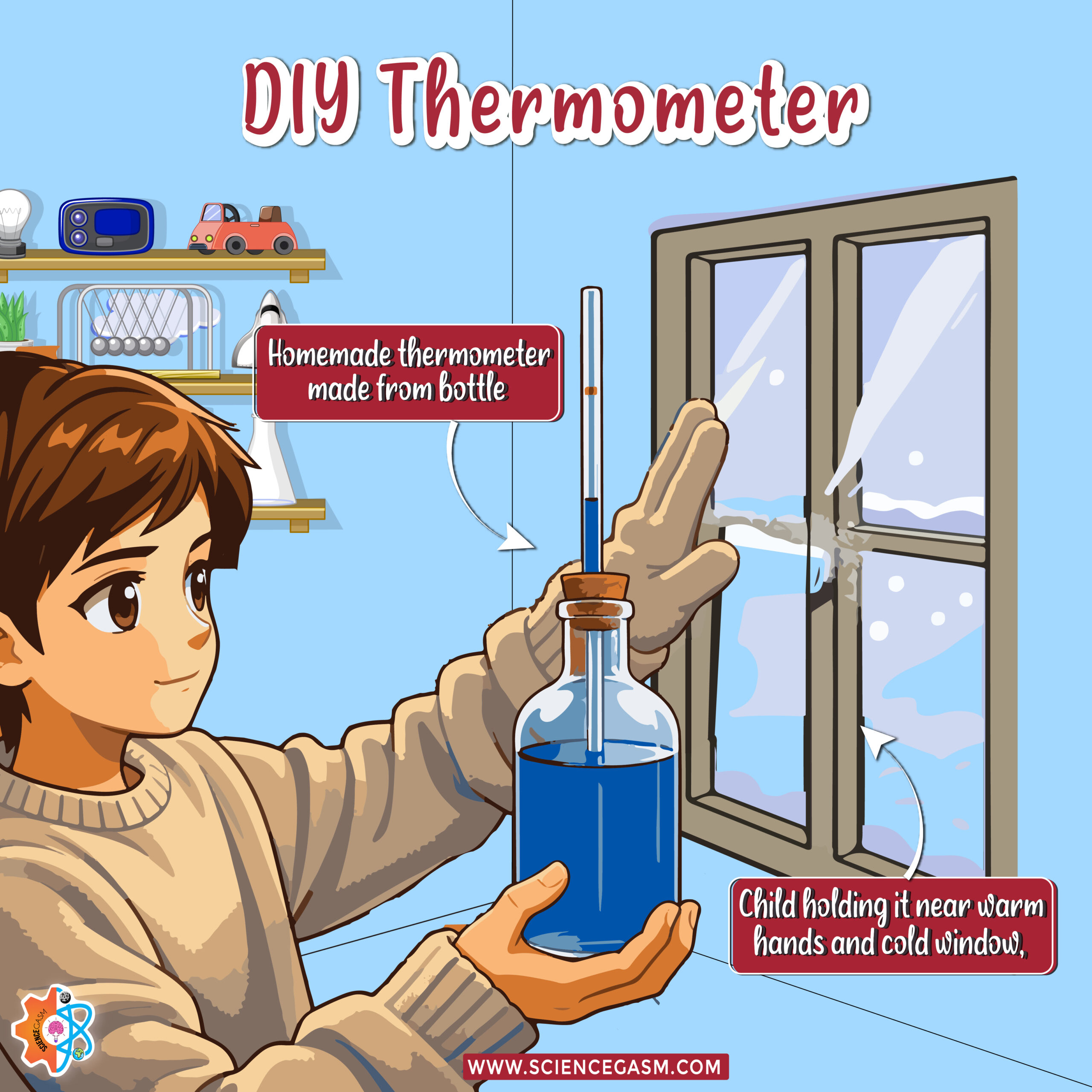
6. Build a Thermometer (bottle + colored water)
In this hands-on winter science activity, kids create their own simple thermometer using a clear bottle, colored water, and a straw or narrow tube. As the bottle warms up in their hands or cools near a window, they’ll notice the colored liquid slowly rising or falling inside the tube. This happens because liquids expand when heated and contract when cooled — a concept called thermal expansion. By observing real temperature changes in action, children learn how thermometers work and how heat affects matter in everyday life. 🌡️❄️
👉 Takeaway: thermal expansion
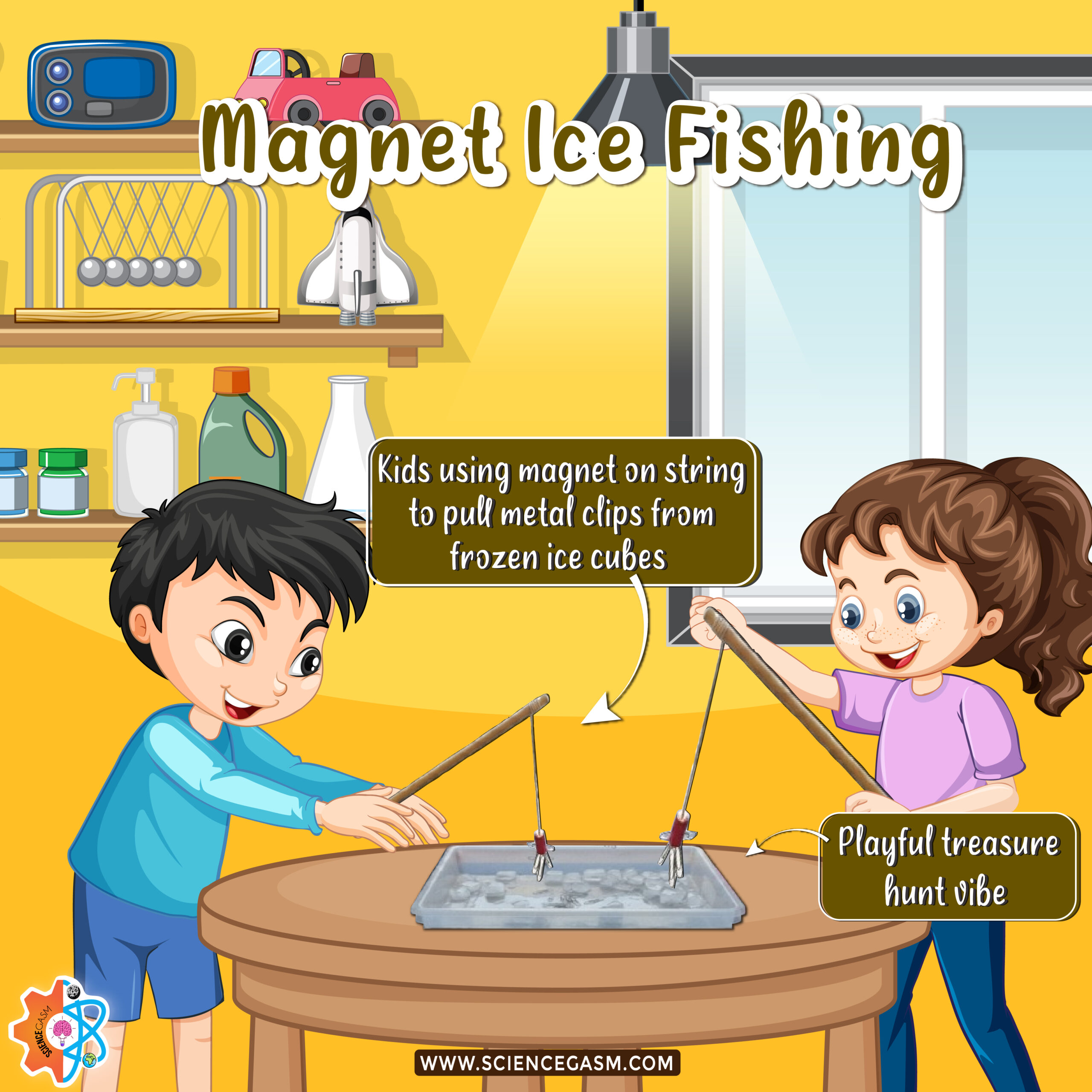
7. Ice Fishing for Magnets
In this playful winter science activity, kids “fish” for paper clips or small metal objects frozen inside ice cubes using a magnet tied to a string or stick. As the magnet pulls the metal through the ice, children can see that magnetic force works even without direct contact. This simple experiment introduces the concept of magnetism, showing how certain materials are attracted to magnetic fields and how forces can act at a distance. It’s a fun, hands-on way to explore physics while feeling like a winter treasure hunt! 🧲❄️
👉 Takeaway: magnetism
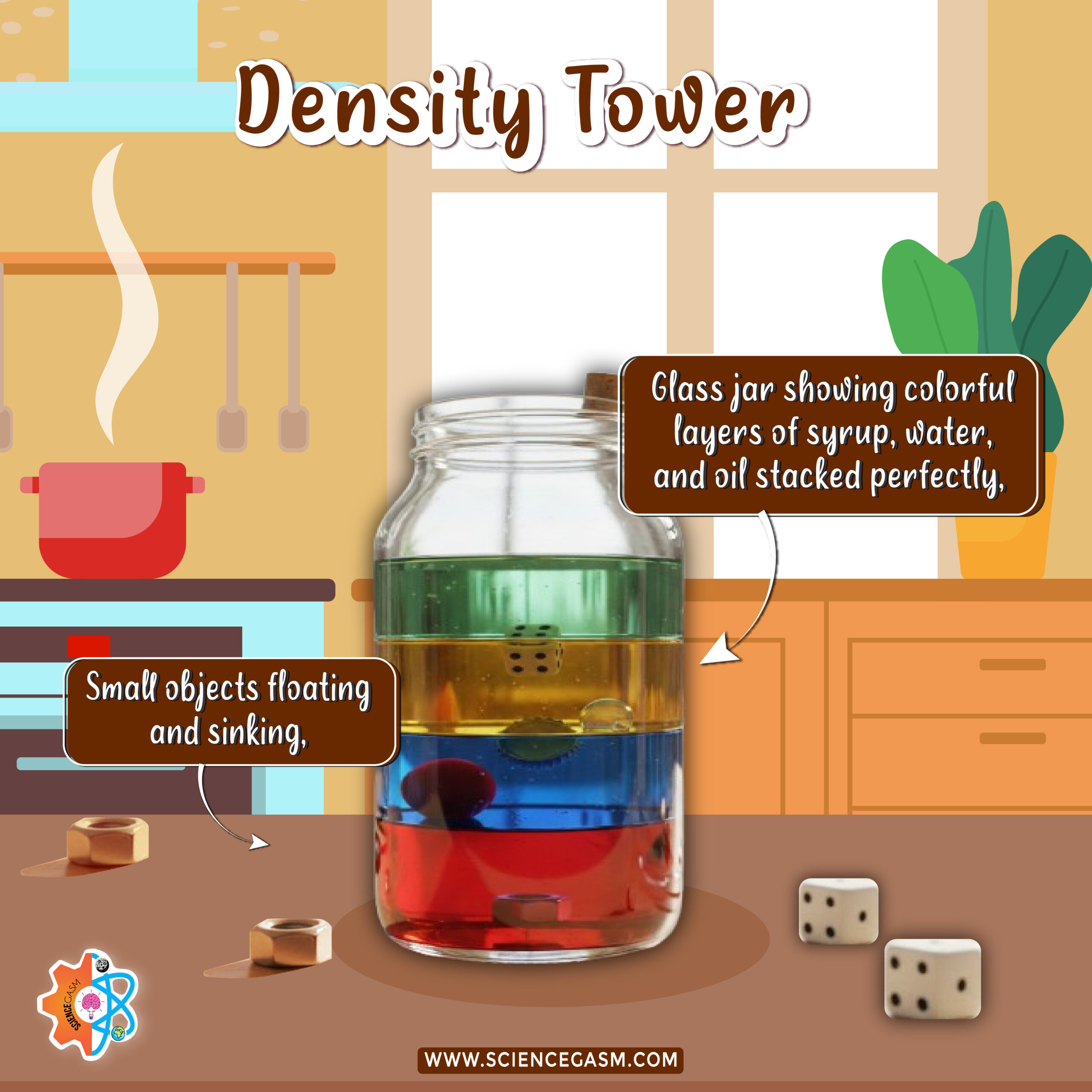
8. Density Tower (oil, water, syrup)
In this colorful winter science experiment, kids carefully pour syrup, water, and oil into a clear glass or jar to create a layered “liquid tower.” Instead of mixing together, each liquid forms its own level, with the heaviest at the bottom and the lightest floating on top. This happens because of differences in density, or how much mass a substance has in a given space. By dropping in small objects and watching where they settle, children can also explore buoyancy and why things sink or float. It’s a simple yet powerful way to visualize an important physics concept! 🧪❄️
👉 Takeaway: density & buoyancy
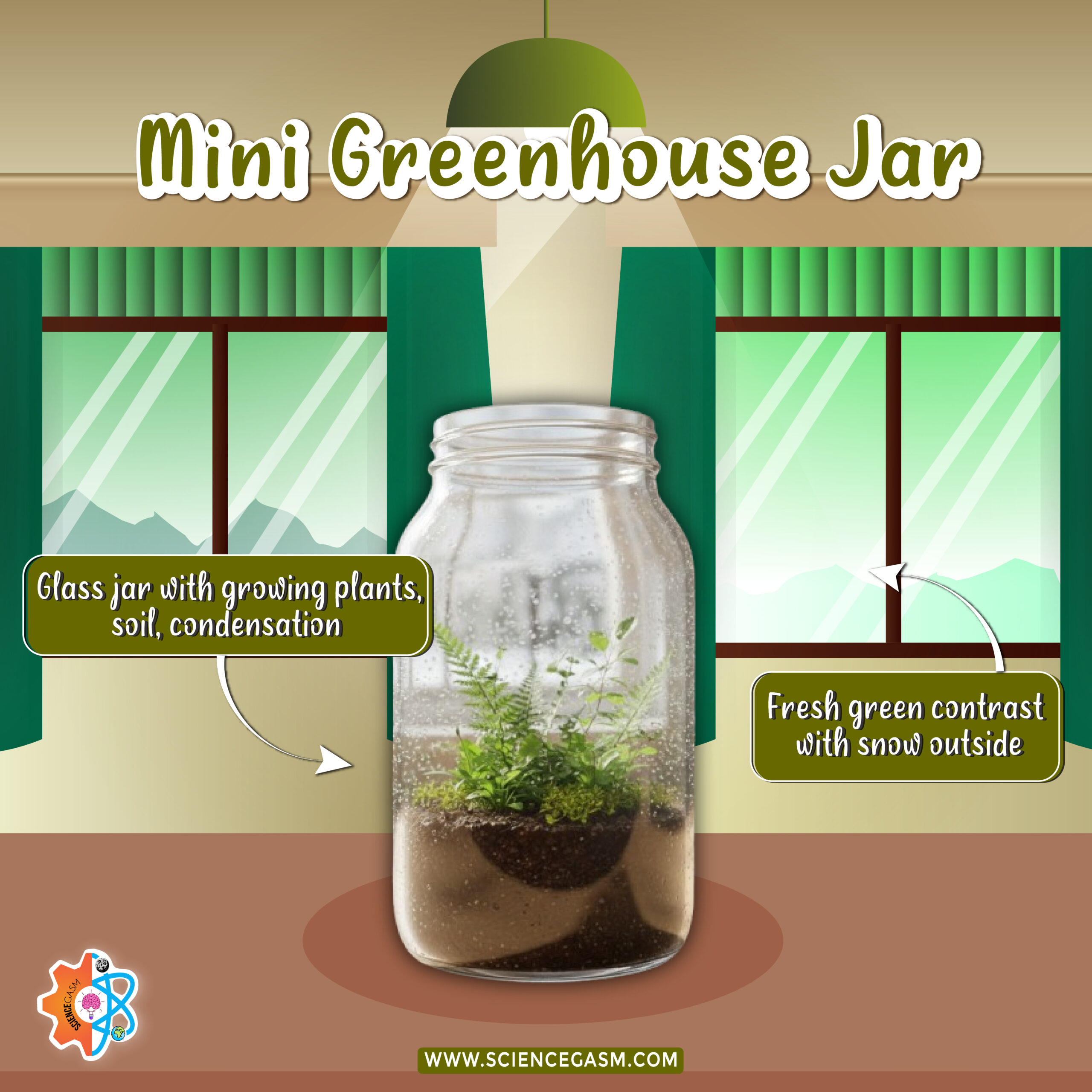
9. Mini Greenhouse in a Jar
In this cozy winter science activity, kids plant small seeds in soil inside a clear jar and lightly water them before sealing the lid or covering with plastic wrap. Over time, they’ll see water droplets form on the glass and drip back down into the soil, creating a continuous moisture cycle similar to rain in nature. As the seeds sprout and grow, children observe each stage of the plant life cycle — from germination to leaves forming — all within a self-sustaining mini greenhouse. It’s a wonderful way to learn about ecosystems, water recycling, and plant growth during cold months. 🌱❄️
👉 Takeaway: plant life cycles & moisture cycles
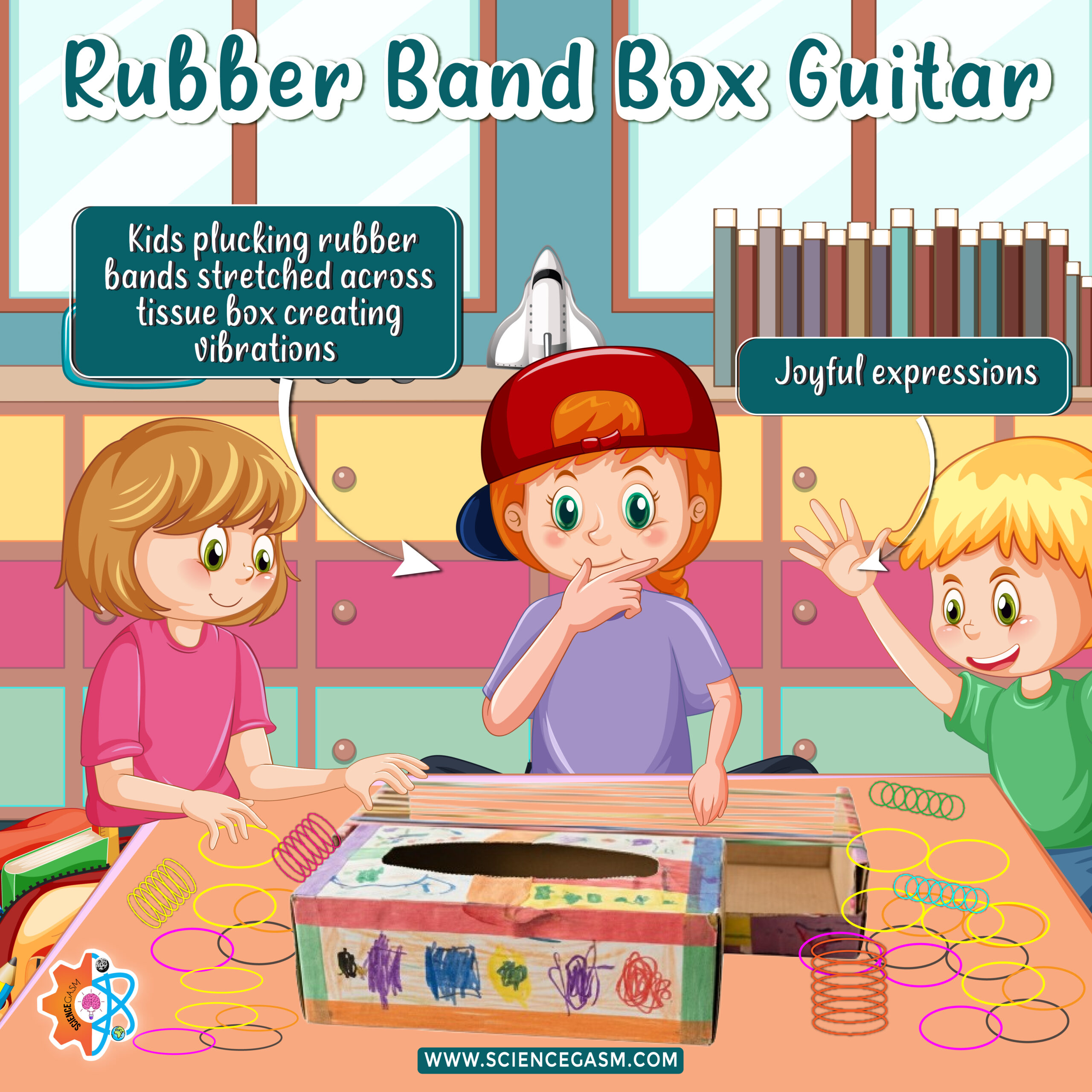
10. Sound Vibrations with Rubber Bands Box Guitar
For this fun physics experiment, kids stretch different rubber bands across an empty tissue box or shoebox to create a homemade “guitar.” When they pluck the bands, they can see and feel them vibrate while hearing different sounds depending on thickness and tightness. These vibrations travel through the air as sound waves, reaching our ears as music. By experimenting with tension and band size, children learn how vibration creates sound and why pitch changes — turning everyday materials into a hands-on lesson in acoustics. 🎵📦
👉 Takeaway: vibration & sound waves
❄️ 10 Outdoor Winter Science Activities
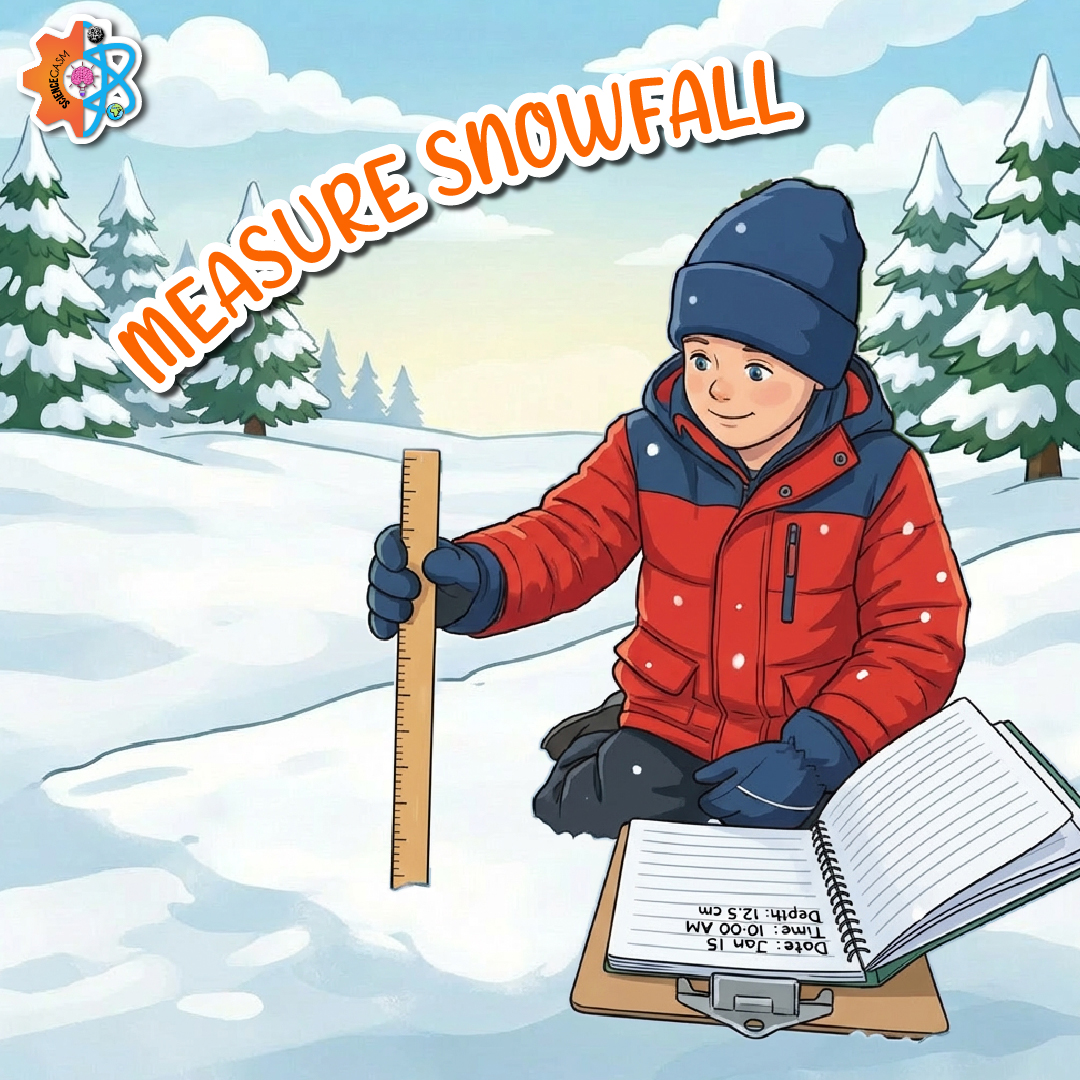
1. Measure Snowfall Each Day
Kids use a ruler or measuring stick to track how much snow falls each day, writing the results in a simple chart or notebook. Over time, they can compare snowfall amounts and notice patterns after storms or warmer days. This activity introduces data collection, basic graphing, and how weather changes over time. It helps children think like scientists by observing, recording, and analyzing real-world information. 📊🌨️
👉 Takeaway: weather patterns & data collection
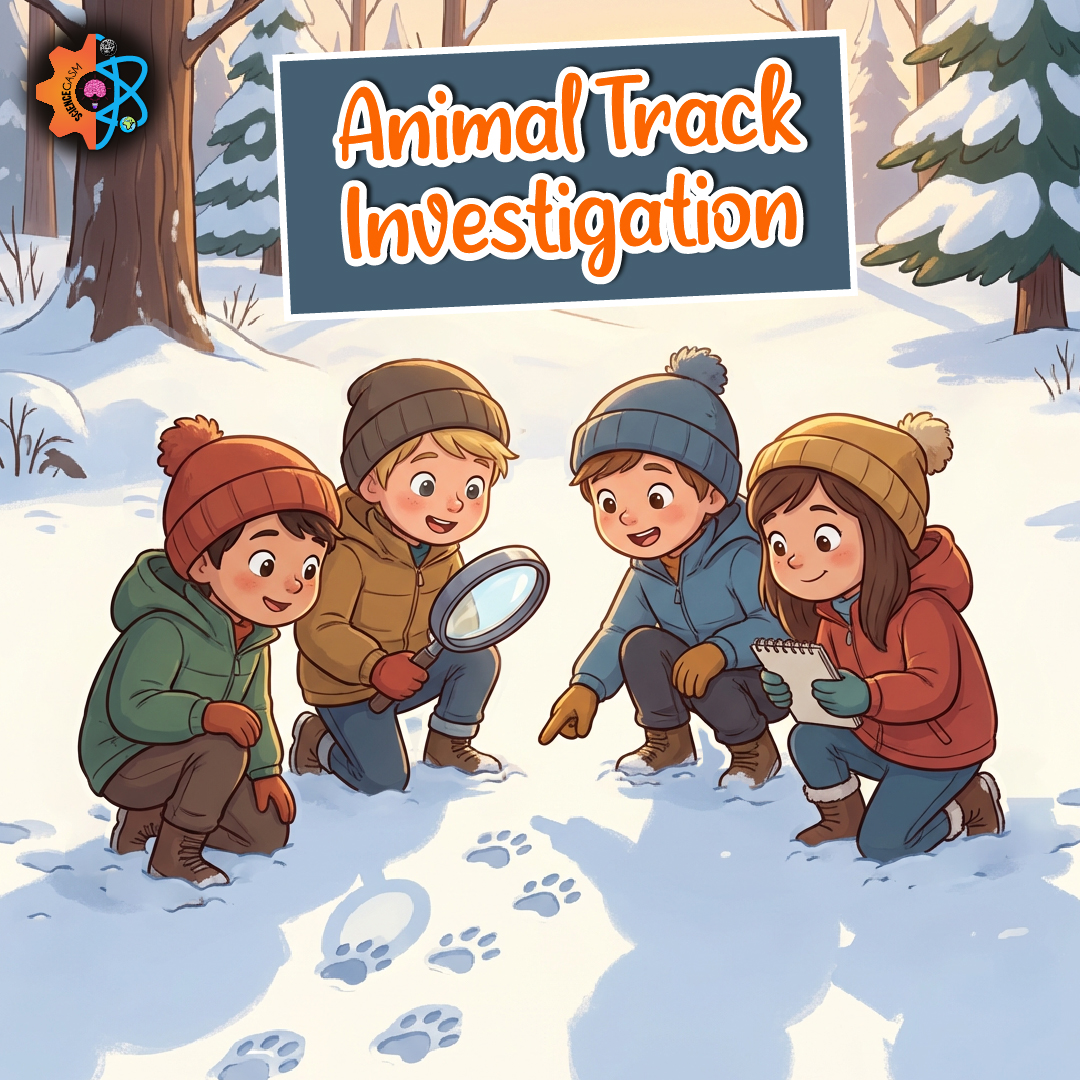
2. Animal Track Investigation
After a snowfall, kids search for footprints left behind by birds, squirrels, cats, or other animals and try to identify who made them. By comparing track shapes, sizes, and movement patterns, children learn how animals travel, hunt, and survive in winter. This activity teaches biology and ecosystems, showing how living things interact with their environment even when it’s cold. 🌲
👉 Takeaway: biology, ecosystems
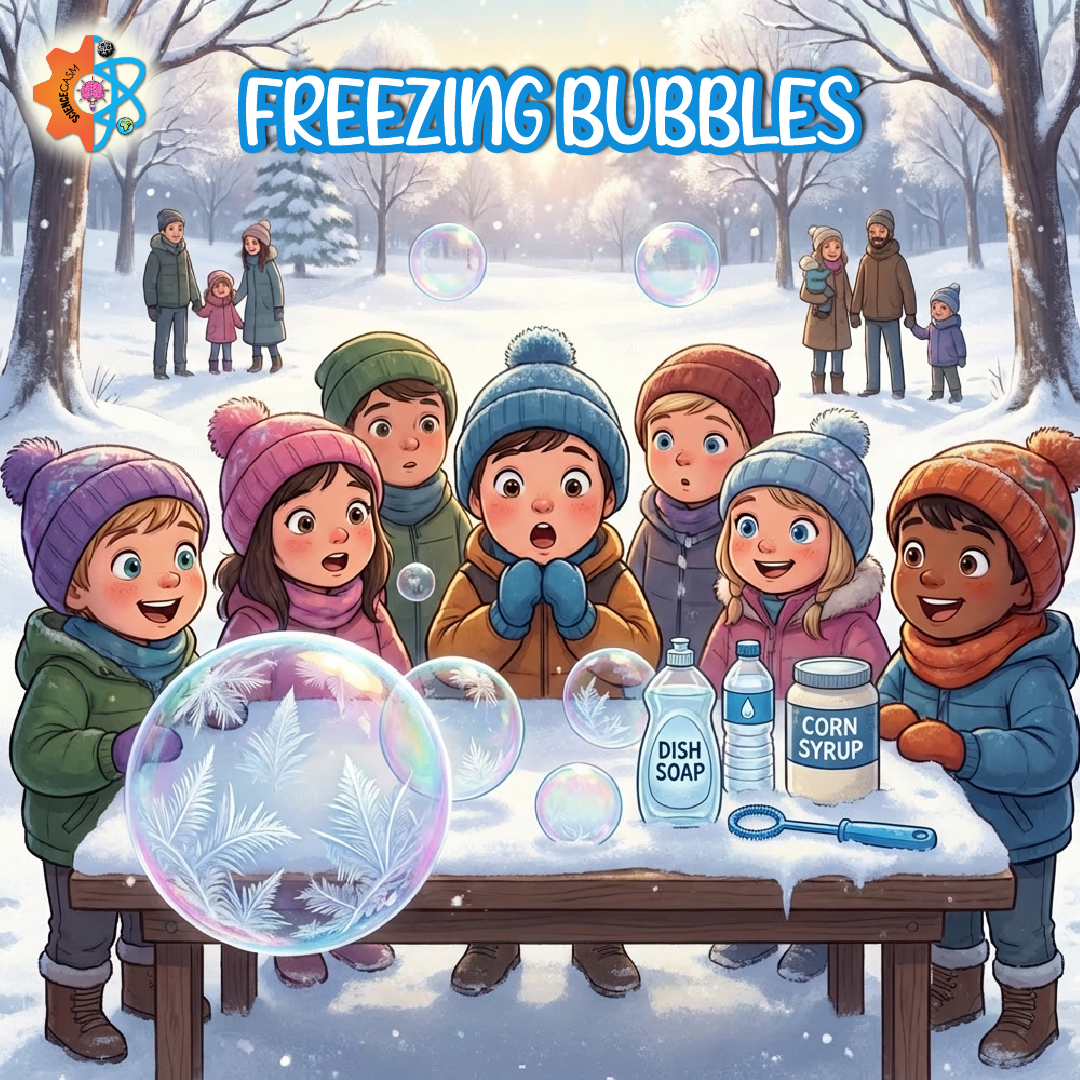
3. Freeze Bubbles Outside
On a very cold day, kids blow soap bubbles and observe as they slowly freeze, forming beautiful crystal patterns across the surface. As temperatures drop, the liquid bubble turns solid, letting children see crystallization happen before their eyes. This experiment helps explain how temperature affects matter and how freezing changes liquids into solids. 🫧✨
👉 Takeaway: crystallization & temperature change
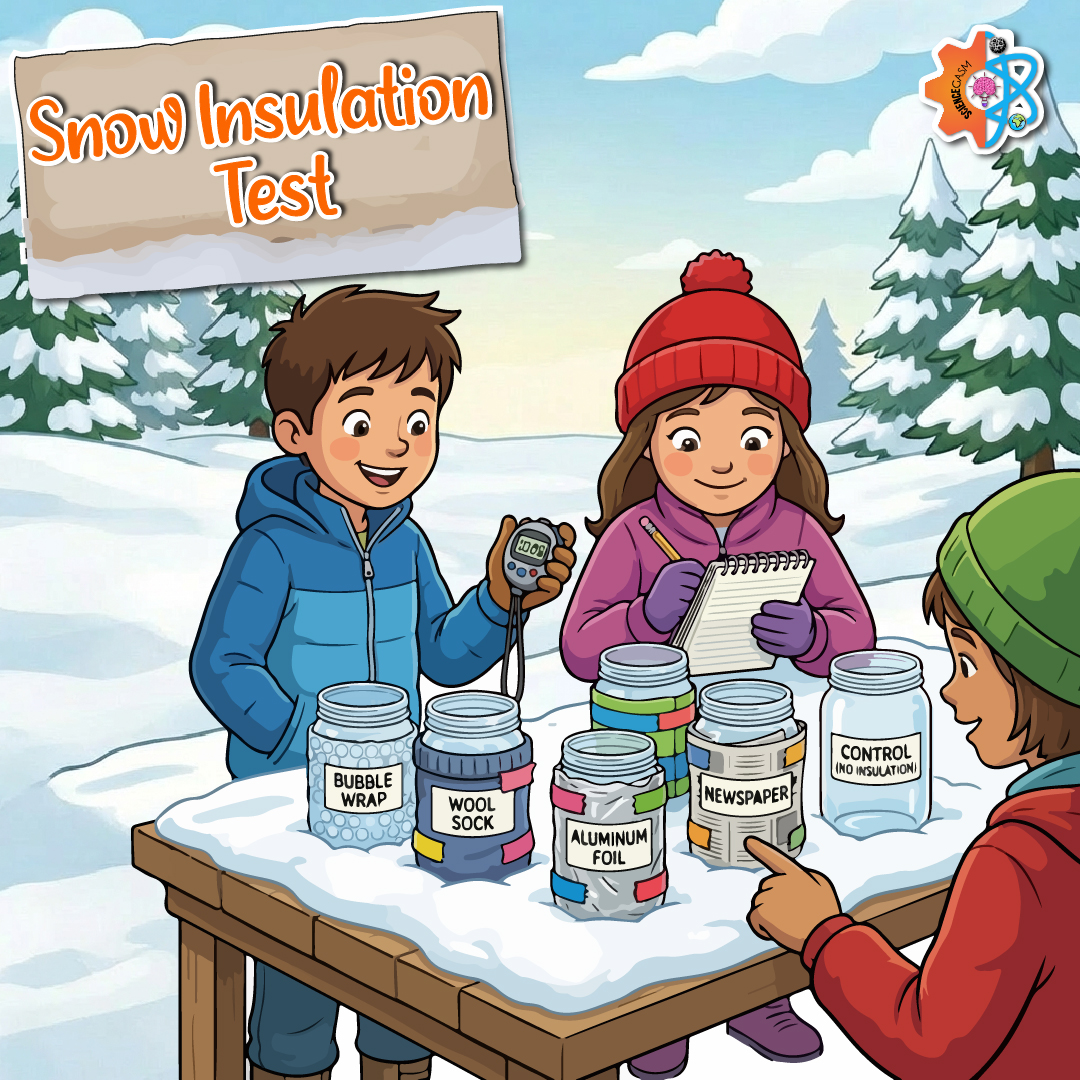
4. Snow Insulation Experiment (which keeps ice frozen longest)
Kids wrap ice cubes in different materials like snow, fabric, foil, or paper and place them outside to see which melts slowest. Surprisingly, snow often works best because it traps air and slows heat transfer. This experiment teaches insulation and heat loss, showing how materials can keep things warm or cold — just like animals’ fur or winter clothing. 🧣❄️
👉 Takeaway: insulation & heat loss
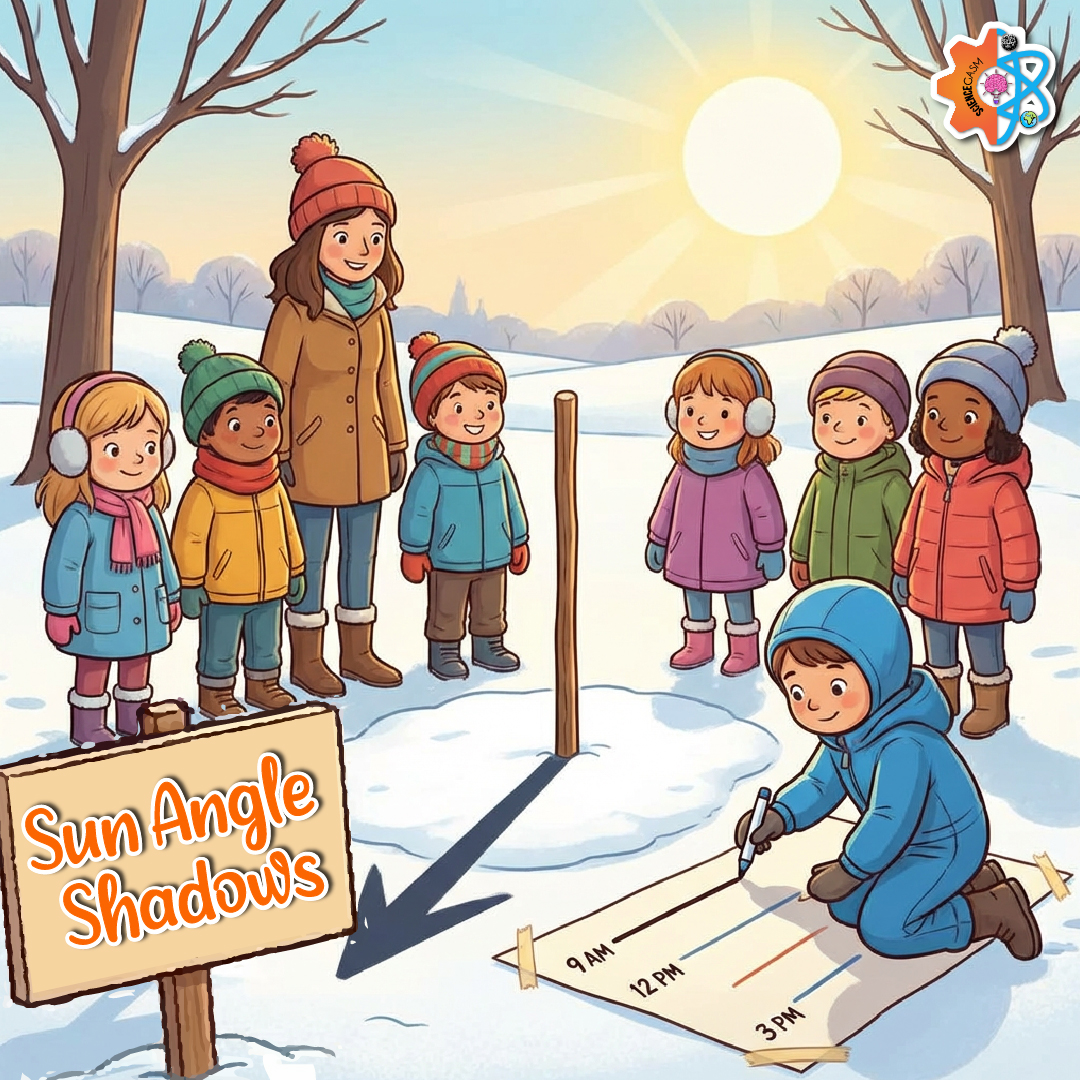
5. Sun Angle Shadow Tracking
Children mark the length of a shadow cast by a stick or their own body at different times of day and over several winter days. They’ll notice shadows are longer in winter and shorter at midday. This demonstrates how the Sun’s position changes due to Earth’s rotation and tilt, helping explain seasons and daylight length in a simple, visual way. 🌍📐
👉 Takeaway: Earth’s rotation & seasons
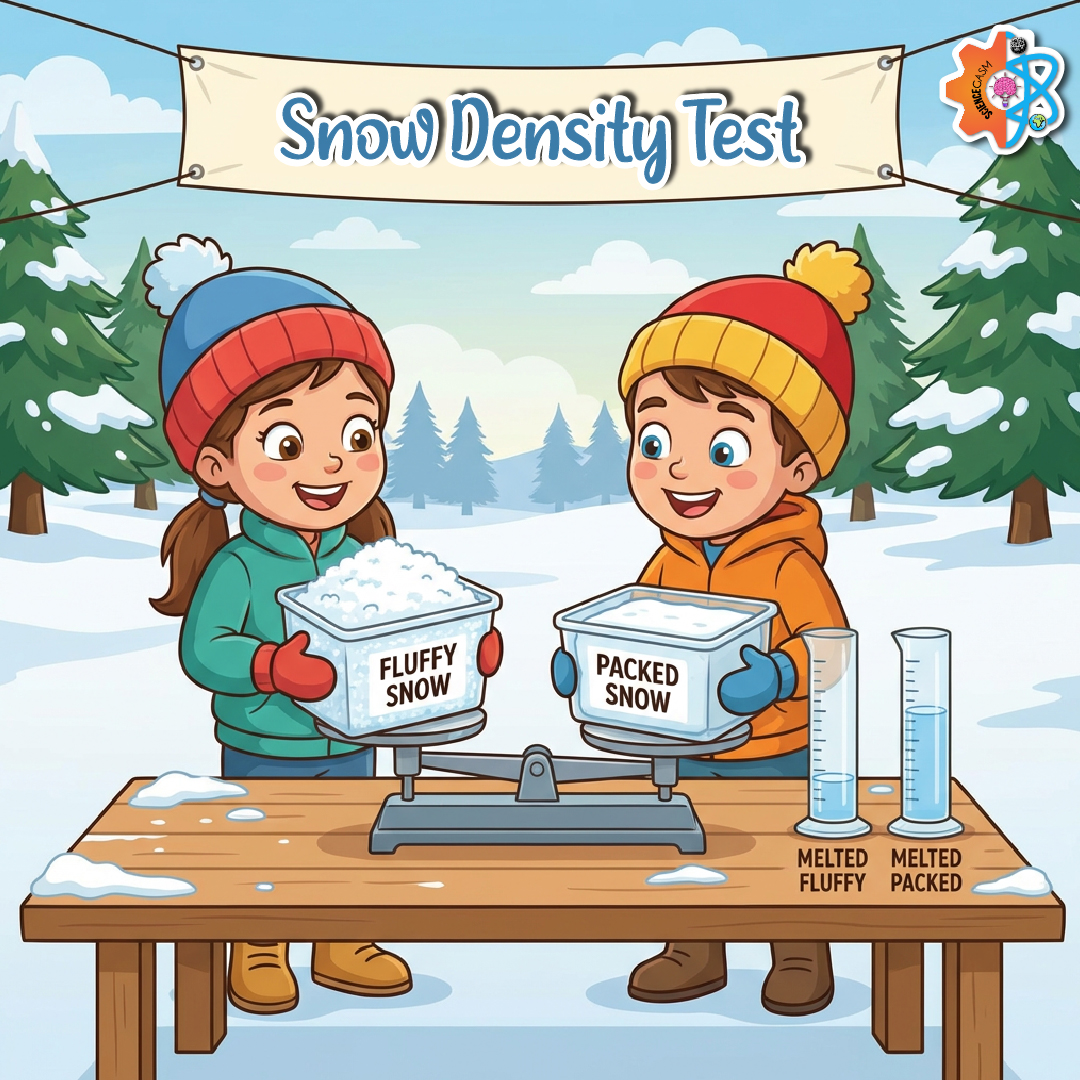
6. Snow Density Test (light vs packed snow)
Kids fill one container with fluffy snow and another with packed snow, then compare their weights or how much water they make when melted. Even though both look full, packed snow contains more matter. This teaches mass and volume and introduces the idea of density — how tightly particles are packed together. ⚖️🌨️
👉 Takeaway: mass & volume
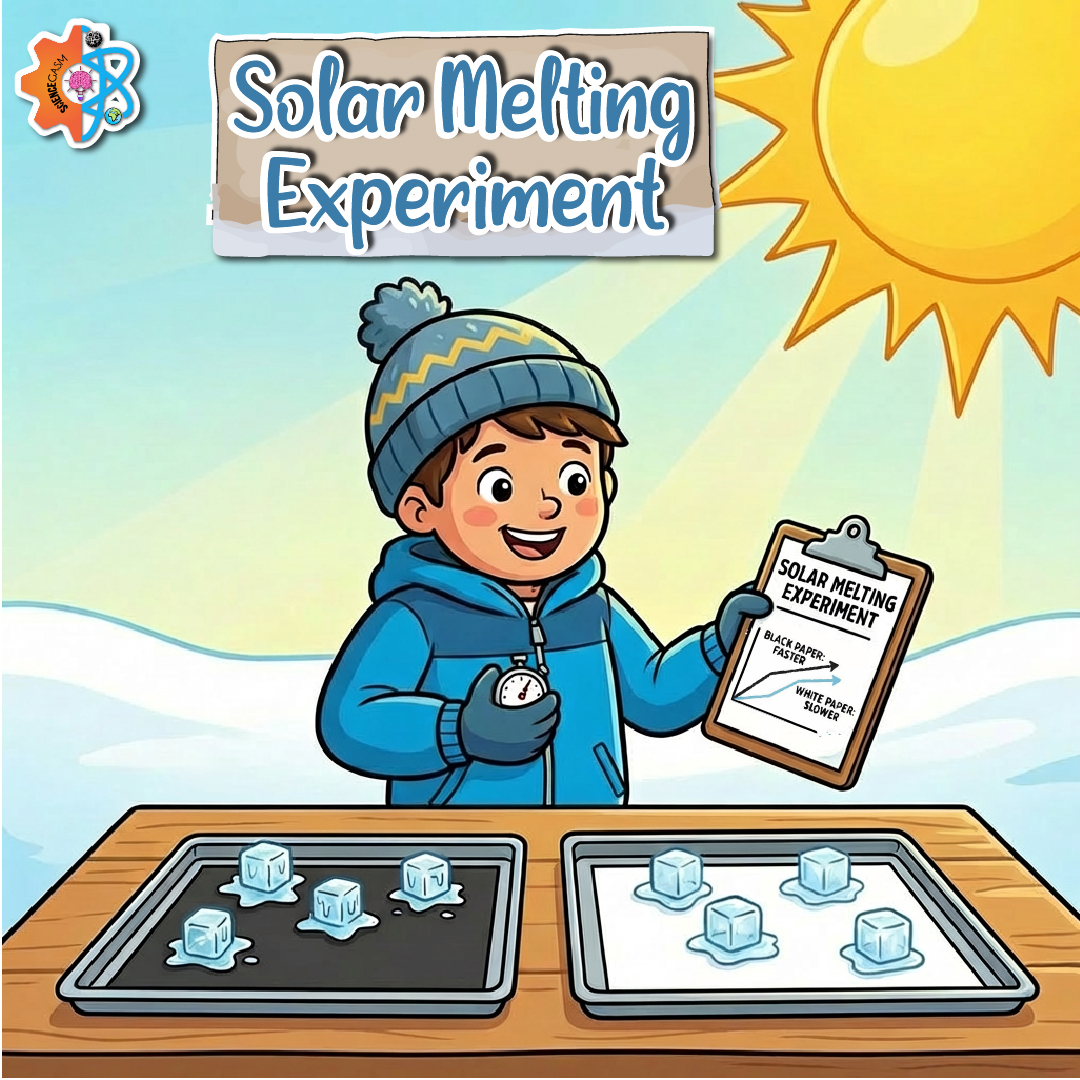
7. Solar Melting Experiment (dark vs light surfaces)
Place ice cubes on dark paper and light paper under the sun and watch which melts faster. The darker surface absorbs more heat energy, causing faster melting. This simple experiment shows energy absorption and how color affects temperature — the same reason dark clothes feel warmer in sunlight. 🧊🌞
👉 Takeaway: energy absorption
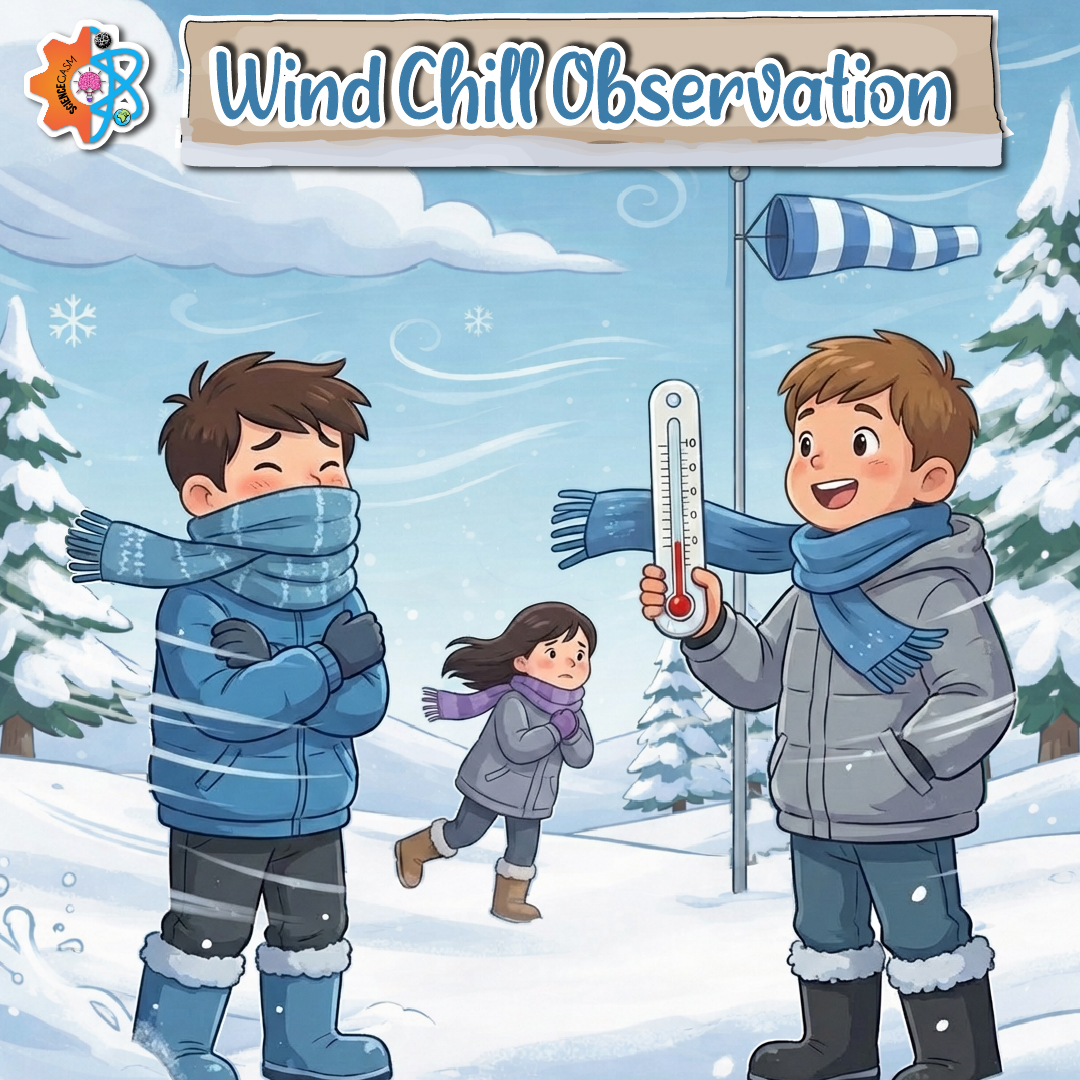
8. Wind Chill Observation (feels vs actual temp)
Kids compare how cold it feels on a calm day versus a windy day at the same temperature. Wind moves heat away from the body faster, making us feel colder even if the thermometer doesn’t change. This teaches heat transfer by convection and helps explain why winter winds are so chilling. ❄️💨
👉 Takeaway: heat transfer by convection
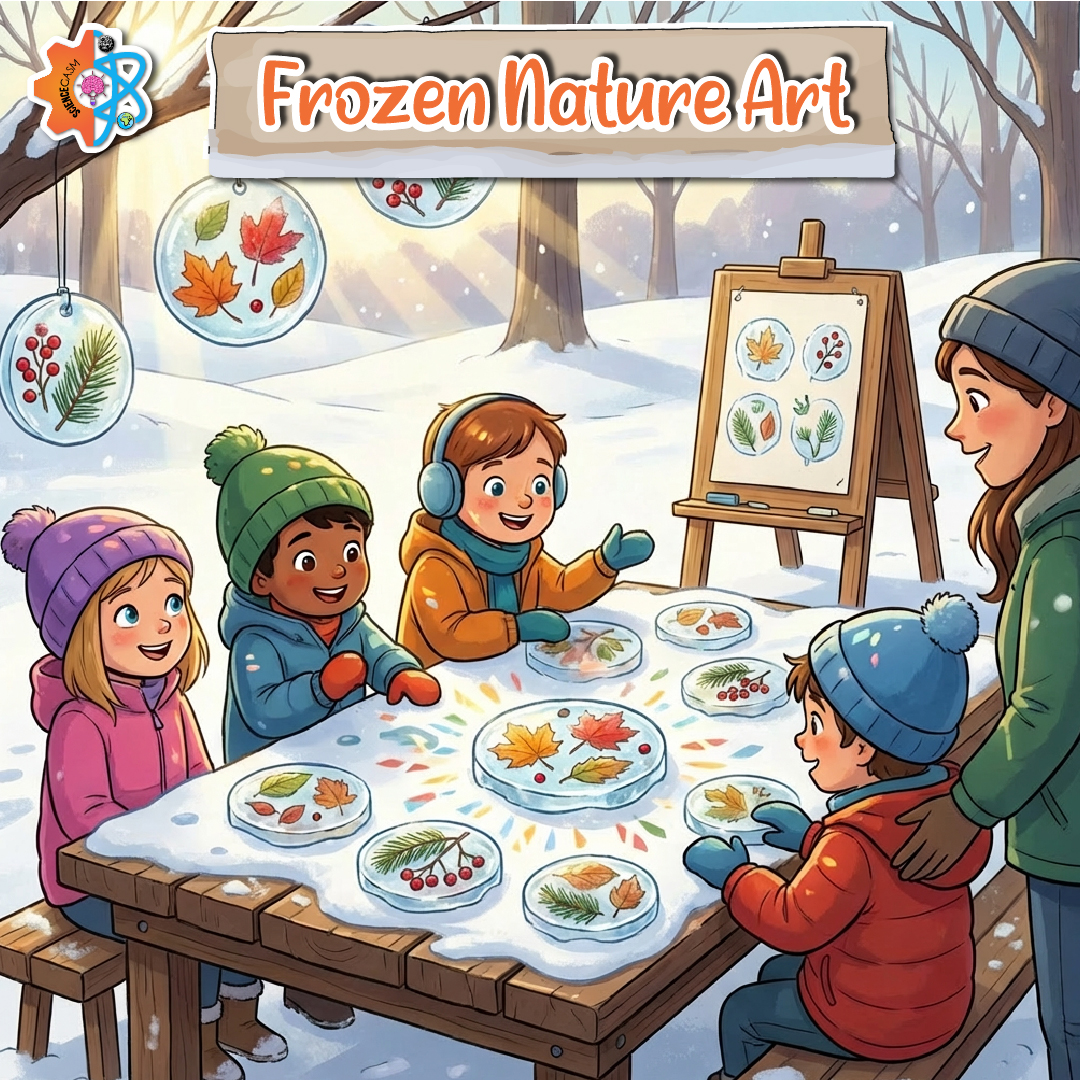
9. Frozen Nature Art (leaves in ice pans)
Children place leaves, berries, and pine needles in water-filled pans and freeze them into clear ice “art pieces.” As the water freezes, they see how liquid turns solid and traps objects inside. This activity demonstrates freezing points, states of matter, and how cold can preserve materials — just like freezing food. 🧊🍃
👉 Takeaway: freezing points & preservation
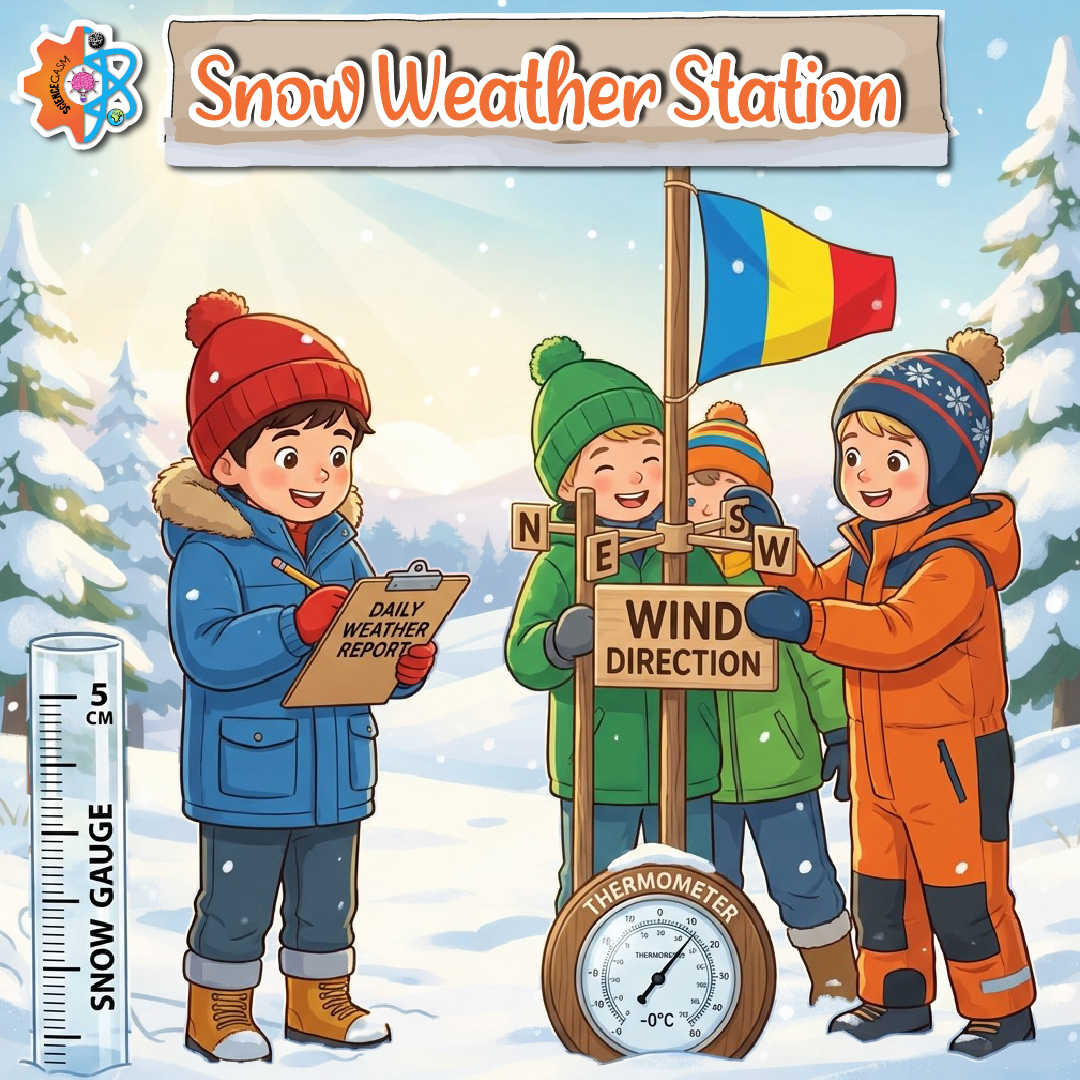
10. Build a Snow Weather Station
Kids create simple tools like a snow gauge, wind flag, and thermometer area to monitor winter weather each day. They record snowfall, wind direction, temperature, and cloud cover, learning how meteorologists collect information. This introduces meteorology basics and encourages observation, consistency, and scientific thinking. 📈❄️
👉 Takeaway: meteorology basics
Making Science Fun for Kids!
While hands-on winter science activities keep kids curious, active, and excited to learn, not all learning environments spark the same enthusiasm. Many children experience boredom in traditional classrooms, where sitting still and repeating tasks can drain motivation and joy from education. But why does this happen — and how does boredom actually affect the brain, learning, and academic performance? In this post, we explore the science behind boredom in schools and uncover what research reveals about keeping young minds truly engaged.